How to Clean, Protect, and Extend the Life of Your Garage, Basement, or Commercial Epoxy Floor in Bergen County, NJ
Epoxy flooring has become one of the most popular upgrades for Bergen County homeowners — especially in towns like Ridgewood, Ramsey, Mahwah, Wyckoff, Franklin Lakes, and Saddle River. Whether it’s installed in a garage, basement, or commercial space, epoxy offers a clean, polished look and exceptional durability. But even though epoxy is considered “low maintenance,” it still benefits from a thoughtful care routine. The better you maintain it, the longer it lasts, the better it looks, and the more value it adds to your home.
This guide is written specifically for Bergen County conditions — including winter salt, humidity swings, local driving patterns, and the way garages are used in this region. If you want your epoxy floor to stay glossy, bright, and damage‑free for 15–20+ years, this is the maintenance routine that will get you there.
Understanding Bergen County Conditions
Before diving into cleaning routines, it’s important to understand why epoxy floors in Bergen County face unique challenges.
Winter Salt & Brine
Bergen County roads are heavily salted and brined from December through March. Towns like Mahwah, Ramsey, and Oakland — which sit at higher elevations — often receive even more salt due to earlier freezing. When you pull into your garage, that salt melts off your vehicle and sits on the floor. If left too long, it can leave white hazy patches and slowly dull the topcoat.
Sand & Grit
Many Bergen County neighborhoods use sand along steep roads and driveways (think Franklin Lakes, Wyckoff, and Ho-Ho-Kus). Sand is abrasive and can create micro‑scratches if not removed regularly.
Humidity
Summers in Bergen County are humid, especially in towns closer to the river like Fort Lee, Edgewater, and Englewood Cliffs. Humidity can cause streaking if soap residue is left behind during cleaning.
Garage Usage
Bergen County garages are often used as:
- storage rooms
- home gyms
- workshops
- mudrooms
- car detailing spaces
This means epoxy floors see more foot traffic, more dirt, and more daily use than in other regions.
Understanding these local factors helps shape a maintenance routine that actually works here — not a generic one-size-fits-all guide.
Daily Care: Protecting Against Sand, Salt & Everyday Debris
Daily maintenance is simple but important. Bergen County homeowners should get into the habit of removing loose debris — especially during winter and early spring.
A quick sweep or pass with a microfiber dust mop removes sand, salt crystals, and grit before they can scratch the surface. If you prefer vacuuming, use a soft floor attachment to avoid scuffing the topcoat.
Spills should be wiped promptly. Epoxy is non‑porous, so liquids won’t penetrate, but they can leave a film that dulls the gloss. This is especially true for:
- motor oil
- brake fluid
- gasoline
- road grime
- melted snow runoff
A simple wipe with warm water is usually enough.
Daily care isn’t about deep cleaning — it’s about preventing buildup. A few seconds of attention each day can prevent hours of corrective cleaning later.
Weekly Care: Maintaining Gloss & Clarity
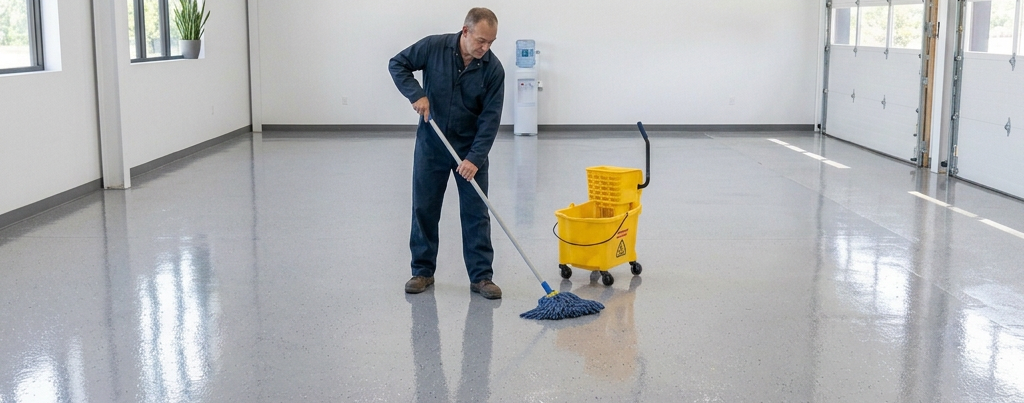
Weekly cleaning helps remove tire residue, brake dust, and general grime that accumulates over time. A warm water mop with a neutral cleaner is the safest and most effective method.
Why Neutral Cleaners Matter in Bergen County
Because of the heavy salt use in winter, many homeowners are tempted to use strong cleaners to “cut through” residue. But harsh cleaners like vinegar, citrus products, bleach, ammonia, degreasers, or abrasive powders can cloud the surface or break down the protective layer.
Stick to:
- diluted Simple Green
- Zep Neutral Floor Cleaner
- Mr. Clean (diluted)
- a small amount of dish soap
Weekly cleaning also helps prevent tire marks from becoming stubborn. Hot tires — especially in summer — leave polymer residue that bonds lightly to epoxy. Removing it regularly keeps the floor looking fresh.
Monthly Deep Cleaning: Restoring the Floor’s Freshness
A monthly deep clean helps maintain the floor’s clarity and shine. Start by sweeping thoroughly to remove loose debris. Then mop with warm water and a neutral cleaner, using a microfiber mop to avoid streaks. After cleaning, rinse the floor with clean water to remove any leftover soap film.
This deeper cleaning removes the buildup that naturally accumulates over time — oils, salt residue, brake dust, and household dirt — and keeps the floor looking fresh. In basements, where traffic is lighter, monthly cleaning may be all that’s needed to keep the floor pristine.
Seasonal Care: Navigating Bergen County Winters
Winter is the toughest season for epoxy floors in Bergen County. Road salt, slush, sand, and brine treatments get tracked in every time a vehicle pulls into the garage. These materials can leave white, chalky marks on epoxy if they sit for too long.
Winter Maintenance Routine
During winter months, it’s smart to sweep more frequently and mop weekly. Warm water dissolves salt residue quickly, and a neutral cleaner helps lift grime without damaging the coating.
Many homeowners place rubber mats or parking pads under their vehicles during winter. These catch most of the salt and slush before it hits the floor, making cleaning easier and protecting the gloss. This simple step can significantly reduce winter wear.
Spring Cleanup
Spring is the time to remove any leftover salt haze. A thorough deep clean helps restore clarity and shine after months of winter wear.
Handling Spills, Stains, and Tire Marks
Epoxy is highly resistant to oil and chemicals, but spills should still be cleaned promptly. Oil and grease wipe up easily with warm water and a neutral cleaner. Gasoline, brake fluid, and harsher chemicals should be blotted rather than smeared, then cleaned with warm water. If a chemical sits too long, it can discolor the surface or leave a film.
Tire marks are common, especially from soft, high‑performance tires. They’re not harmful, but they can be visually distracting. Warm water and a neutral cleaner usually remove them. Avoid abrasive scrub pads or Magic Erasers — they can dull the gloss by creating micro‑abrasions.
What Not to Use on Epoxy Floors
Homeowners often assume epoxy can handle any cleaner, but certain products can cause long‑term damage. Vinegar and citrus cleaners are acidic and will slowly dull the surface. Bleach and ammonia are too harsh and can cloud the coating. Degreasers break down the topcoat, and abrasive powders scratch the finish. Steam mops and indoor pressure washing should also be avoided, as they can force moisture into expansion joints or damage the coating.
Sticking to neutral cleaners is the safest and most effective approach.
Epoxy vs. Polyurea: Maintenance Differences
If your floor is polyurea or polyaspartic instead of epoxy, maintenance is even easier. Polyurea is more chemically resistant, more UV‑stable, and more scratch‑resistant. It’s also less prone to staining. Epoxy, however, offers a thicker build and a higher‑gloss finish, making it ideal for indoor spaces like basements.
Both systems follow the same basic cleaning routine, but polyurea is more forgiving if spills sit longer or if the floor sees heavy chemical exposure. Read our post about the differences between Epoxy, Polyurea, and Polyaspartic flooring systems.
Long‑Term Care and Longevity Tips
Protecting high‑traffic areas helps extend the life of the floor. Rubber mats under vehicles, especially during winter, reduce salt exposure and preserve gloss. Avoid dragging heavy items like toolboxes, jacks, or appliances — lifting instead of dragging prevents scratches. In basements, felt pads under furniture help prevent scuffs.
Keeping the floor clean is the most important long‑term habit. Dirt and sand act like sandpaper, slowly wearing down the topcoat. A clean floor is a long‑lasting floor.
When to Recoat an Epoxy Floor
Most epoxy floors last 15–20 years with proper care. You may want to recoat if the gloss has faded significantly, the topcoat has worn down, or scratches have accumulated. Recoating is far more affordable than replacing the entire system and restores the floor to a like‑new appearance.
Garage vs. Basement vs. Commercial Maintenance
Garage floors require the most maintenance because they face salt, sand, tire marks, oil, gasoline, and winter slush. Weekly cleaning is ideal. Basement epoxy floors are the easiest to maintain — no salt, no chemicals, no tire marks — and typically last the longest. Commercial floors depend on traffic volume, but daily sweeping and weekly mopping are standard. Machine scrubbing is fine as long as soft pads are used.
Final Thoughts
Epoxy flooring is one of the most durable and attractive surfaces you can install, and maintaining it doesn’t require much effort. A simple routine — regular sweeping, occasional mopping, seasonal care, and avoiding harsh cleaners — keeps the floor looking new for years. Whether your epoxy floor is in a garage, basement, or commercial space, consistent care ensures maximum longevity and performance.
Get a Quote From a Bergen County Epoxy Installer
If you’re ready to upgrade your garage floor, read our epoxy flooring cost guide and explore our Bergen County epoxy flooring services and connect with a trusted local installer. You can also browse our full list of service towns to find epoxy flooring professionals near you.